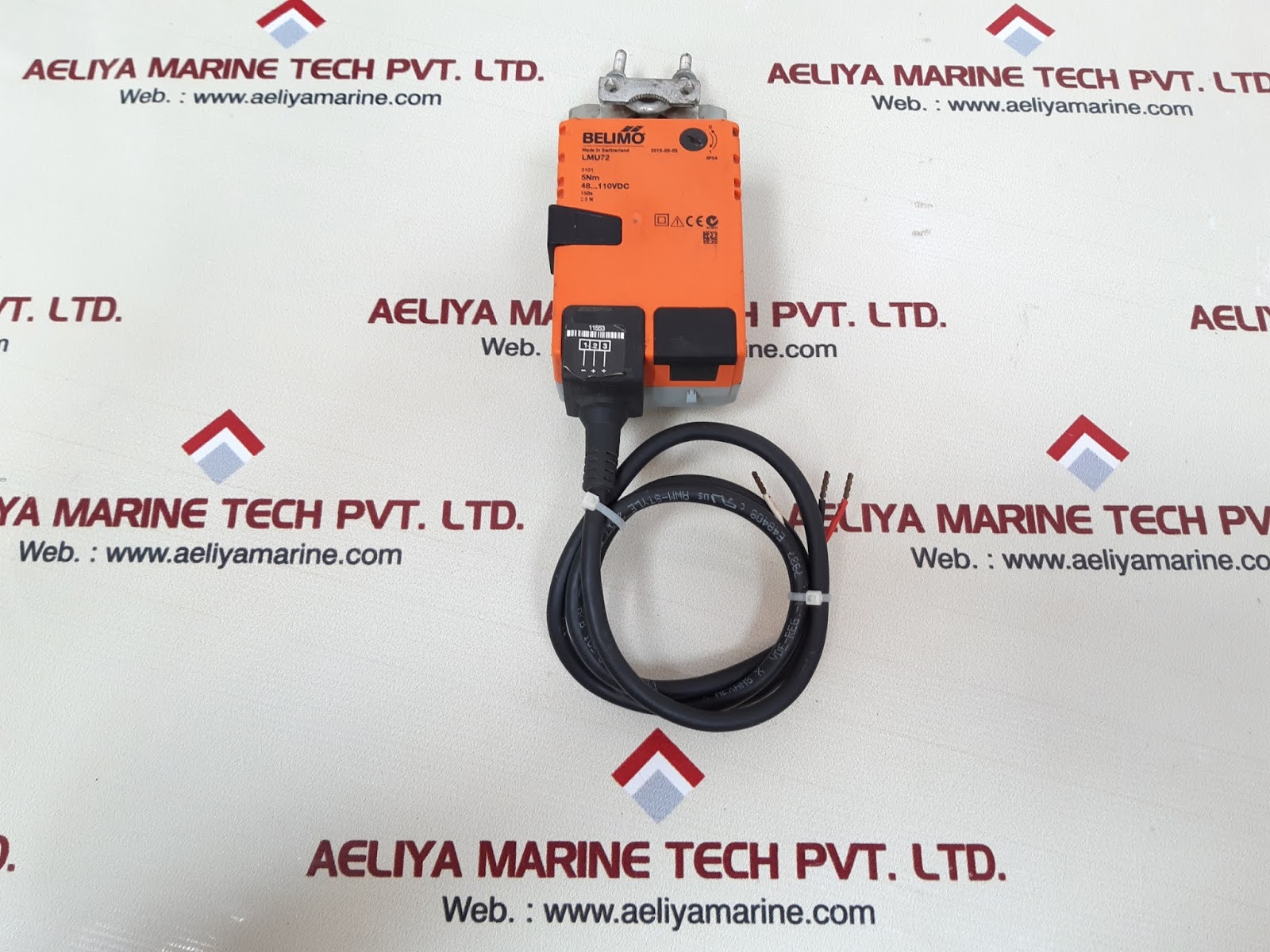
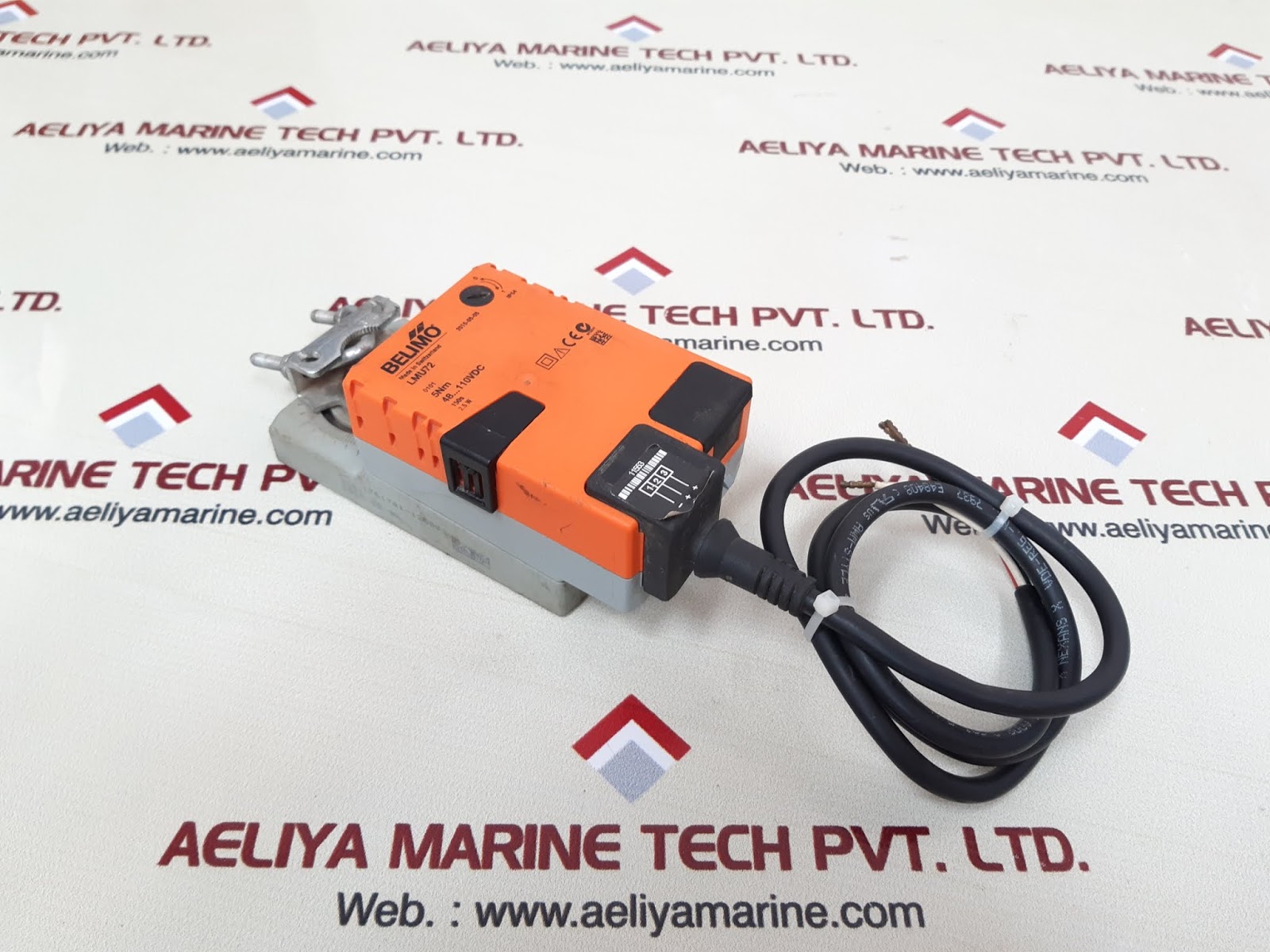
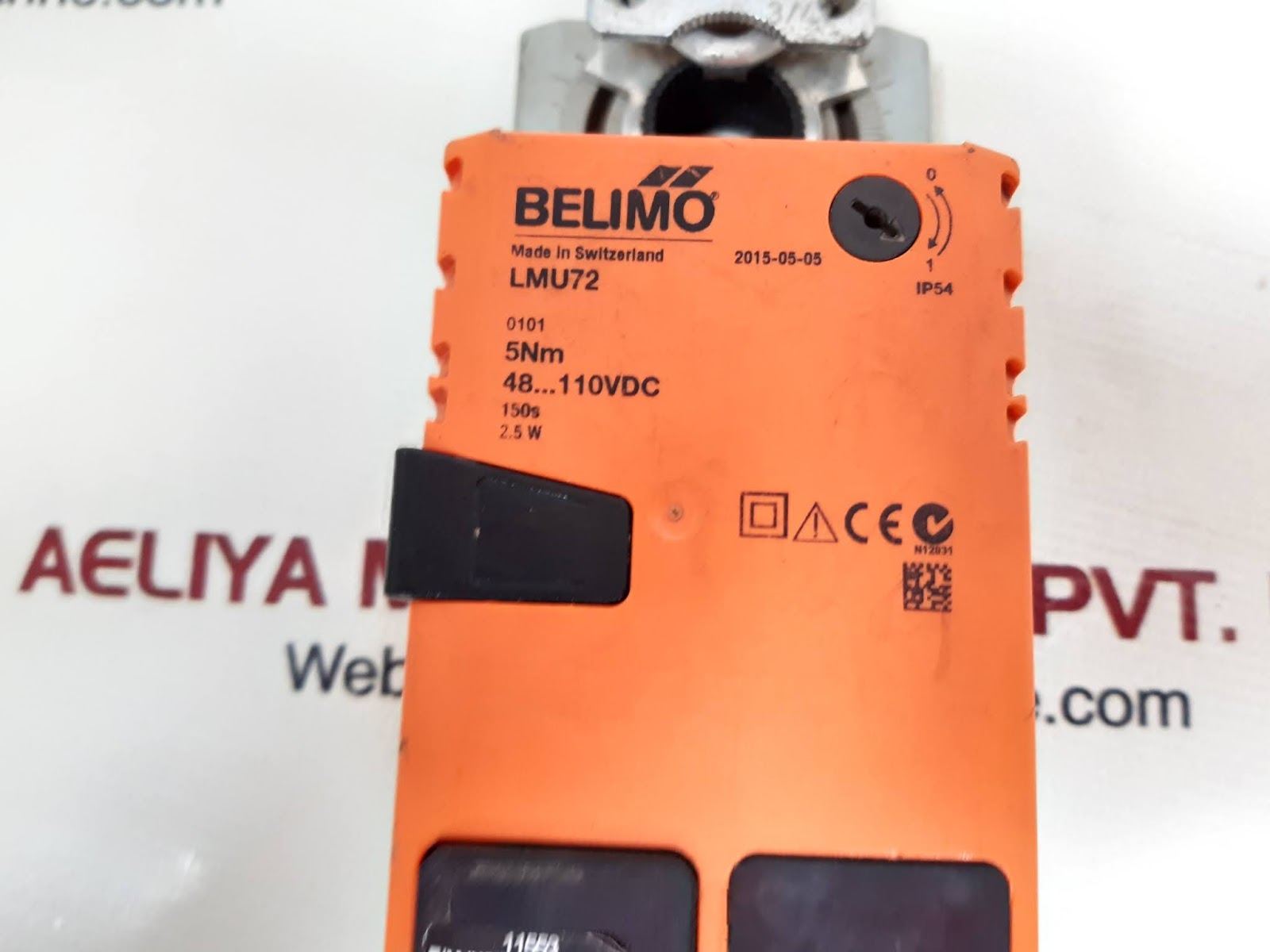
| Attribute | Value |
|---|---|
| Product | Belimo LMU72 Actuator |
| Manufacturer | Belimo |
| Model | LMU72 |
| Code | 0101 |
| Torque | 5nm |
| Voltage | 48…110vdc |
| Running Time | 150s |
| Power Consumption | 2.5w |
| IP Rating | IP54 |
| Part Number | N12034 |
| PC | 1761741-120009 |
| Additional Code | 0101 |
| Unknown Number | 11553 |
| Origin | Made in Switzerland |
| Weight | 430 gm |
Understanding the Belimo LMU72 Actuator
The Belimo LMU72 actuator is an electromechanical actuator used to control dampers and valves in heating, ventilation, and air conditioning systems. It is recognized for its accuracy, reliability, and energy efficiency. The actuator finds extensive use in a range of applications such as commercial buildings, hospitals, and industrial plants.
Key Features and Advantages
Accurate Control: The LMU72 actuator provides accurate control of dampers and valves to provide optimal airflow and temperature control.
Energy Efficiency: Belimo actuators are engineered to save energy, reducing operating expenses.
Reliability: Durable, the LMU72 actuator provides long-term, hassle-free performance.
Versatility: The actuator is compatible with most dampers and valves, suitable for a variety of applications.
Easy Installation: Easy to install, the LMU72 actuator saves time and labor.
Maintenance-Free: Once installed, the LMU72 actuator needs little or no maintenance, saving time and money.
Applications of the Belimo LMU72 Actuator
The Belimo LMU72 actuator is applied in a wide range of HVAC systems, including:
Air Handling Units (AHUs): Regulating fresh air intake and exhaust dampers.
Variable Air Volume (VAV) Systems: Modulating airflow to zones for maximum comfort.
Chillers and Boilers: Regulating valves for temperature control.
Fan Coil Units (FCUs): Modulating airflow for room temperature control.
Selecting the Proper Belimo LMU72 Actuator
When selecting a Belimo LMU72 actuator, take the following into consideration:
Torque Requirements: Make sure the actuator has enough torque to drive the damper or valve.
Voltage Compatibility: Check that the actuator’s voltage requirement is compatible with your system’s power supply.
Control Type: Select the proper control type according to your application requirements.
Environmental Conditions: Account for the working temperature range and protection class for compatibility with the environment.