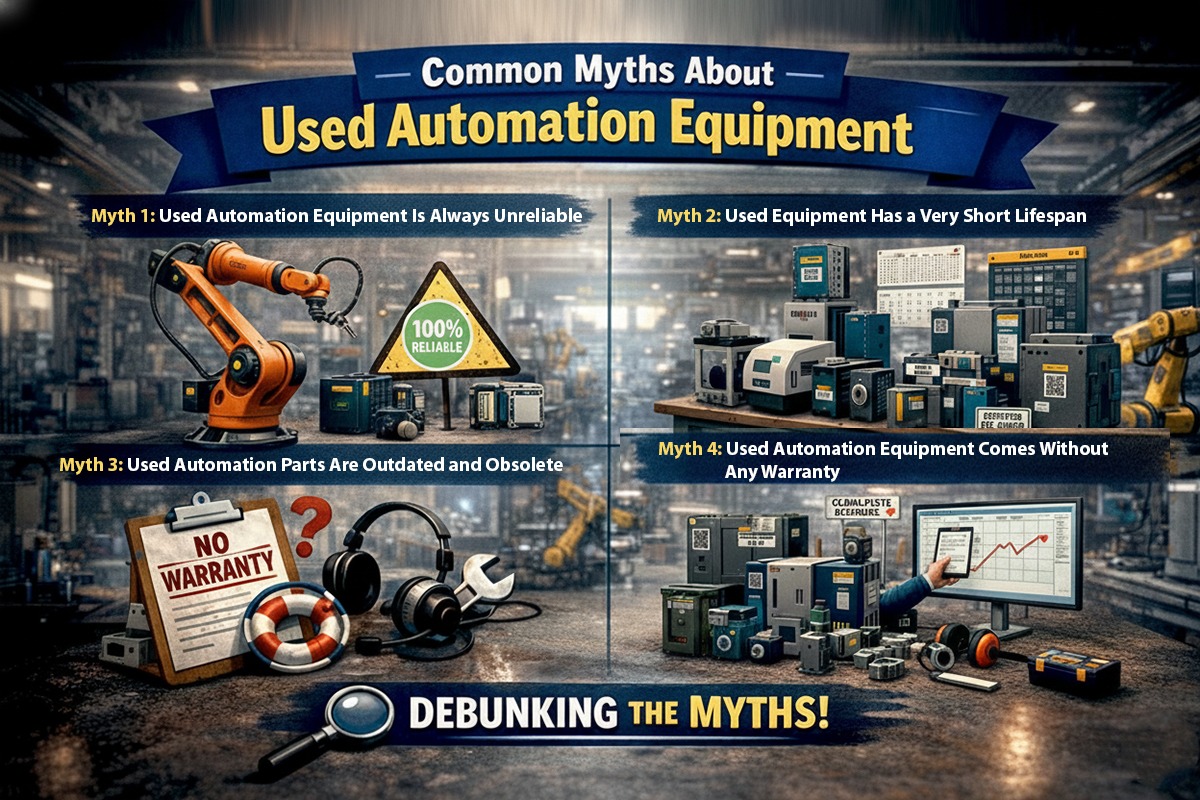
Myth 1: Used Automation Equipment Is Always Unreliable
One of the biggest misconceptions is that used automation equipment is unreliable or close to failure. Many people assume that if a product isn’t brand new, it must be risky.
The truth:
Reliability depends on how the equipment was handled, tested, and refurbished, not whether it is new or used. Reputable suppliers thoroughly inspect, clean, repair, and test used components before resale. Many automation parts—such as PLCs, drives, HMIs, sensors, and power supplies—are designed to operate for years in harsh industrial environments.
In many cases, used equipment comes from surplus stock, system upgrades, or plant closures, not from failed systems. This means the equipment may have plenty of usable life left.
Myth 2: Used Equipment Has a Very Short Lifespan
Another common belief is that used automation parts will fail soon after installation.
The truth:
Industrial automation components are engineered for long operational life. PLC modules, control boards, and industrial drives are built to last for decades if maintained properly. When refurbished correctly, used equipment can perform reliably for many more years.
In fact, some older models are known for their robust build quality, sometimes even outperforming newer versions that prioritize compactness over durability.
Myth 3: Used Automation Parts Are Outdated and Obsolete
Many buyers worry that used equipment is technologically outdated and incompatible with modern systems.
The truth:
While it’s true that some used equipment may be from older product lines, that doesn’t mean it’s unusable. Many industrial systems worldwide still rely on legacy automation components. Replacing an entire system just to match the latest technology is often unnecessary and extremely costly.
Used equipment allows businesses to:
-
Maintain system compatibility
-
Replace failed parts without redesigning systems
-
Extend the life of existing machinery
For industries like marine automation, oil & gas, power plants, and manufacturing, legacy system support is critical, making used equipment a practical choice.
Myth 4: Used Automation Equipment Comes Without Any Warranty
This myth discourages many buyers who fear they’ll have no protection if something goes wrong.
The truth:
Reputable suppliers usually provide warranty coverage on used and refurbished equipment. While the warranty period may be shorter than new products, it still offers peace of mind.
A warranty indicates that the seller is confident in the quality and testing of the product. Always choose suppliers who clearly mention testing procedures and warranty terms.
Myth 5: Used Equipment Is Just Scrap or Pulled-Out Parts
Some people assume that used automation equipment is simply removed from failed systems and resold without proper checks.
The truth:
There is a big difference between scrap equipment and professionally refurbished equipment. Trusted suppliers follow strict refurbishment processes, which often include:
-
Visual inspection
-
Component-level testing
-
Functional performance checks
-
Cleaning and refurbishment
-
Final quality verification
This process ensures the equipment meets operational standards before reaching the customer.
Myth 6: Used Automation Equipment Is Not Safe
Safety is a major concern in industrial and marine environments. Many believe that used equipment could pose safety risks.
The truth:
Safety depends on proper testing, certification, and installation—not on whether the equipment is new or used. Refurbished automation components are tested to ensure they meet operational and electrical safety standards.
In many cases, used equipment is sourced from regulated industries where safety compliance was mandatory from the start. When installed correctly, used automation equipment can be just as safe as new components.
Myth 7: Used Equipment Causes Frequent Downtime
Some believe that installing used parts increases the risk of unexpected downtime.
The truth:
Downtime usually occurs due to poor installation, incorrect configuration, or lack of maintenance—not because the equipment is used. In fact, using proven, field-tested equipment can sometimes be more reliable than untested new models.
Additionally, used equipment is often readily available, reducing downtime caused by long lead times for new parts.
Myth 8: Used Automation Equipment Doesn’t Support Modern Industry Needs
There is a misconception that used equipment cannot support modern automation requirements.
The truth:
Many industrial processes do not require the latest features or connectivity. What they need is stable, consistent performance. Used PLCs, drives, and control modules often meet these needs perfectly.
For many applications, especially replacement or expansion of existing systems, used equipment is the most practical and efficient solution.
Myth 9: Buying Used Equipment Means Compromising on Quality
Quality concerns are one of the biggest barriers to purchasing used automation parts.
The truth:
Quality depends on the supplier’s refurbishment standards, not the age of the product. Trusted suppliers focus heavily on quality control and testing. In some cases, used equipment is sourced from high-quality brands that are no longer manufactured but still outperform lower-quality new alternatives.
Myth 10: Used Automation Equipment Is Only for Small Companies
Many believe that only small businesses use refurbished automation parts to cut costs.
The truth:
Large industries, multinational companies, and marine operators regularly use refurbished automation equipment. Cost optimization, system compatibility, and fast availability are concerns for businesses of all sizes.
Used equipment is often part of strategic maintenance planning, not just budget constraints.
Why These Myths Still Exist
These myths often persist because of:
-
Lack of awareness
-
Poor experiences with unreliable sellers
-
Confusion between scrap and refurbished equipment
-
Overemphasis on “new is always better”
Education and choosing the right supplier are key to overcoming these misconceptions.
How to Buy Used Automation Equipment the Right Way
To avoid risks and get the best value, always:
-
Buy from trusted suppliers
-
Ask about testing and refurbishment processes
-
Check warranty and return policies
-
Ensure compatibility with your system
-
Verify documentation and support availability